


If you work in competitive intelligence, you've probably felt it – that nagging sense that your work is more appreciated in theory than in practice.
The insights get gathered, the reports get shared, and then... not much happens. Product ships what it was always going to ship. Sales asks for the same battlecard they had six months ago. And you wonder whether any of it is actually moving the needle.
It doesn't have to be that way.
The most effective CI teams aren't just feeding information upstream and hoping for the best – they're co-creating roadmaps, shaping priorities, and influencing the decisions that determine whether a product wins or loses in the market.
Here's what it takes to get there.
CI as a strategic partner, not a reporting function
The traditional model – where CI feeds competitor data upstream to product and waits for decisions to come back down – is no longer good enough.
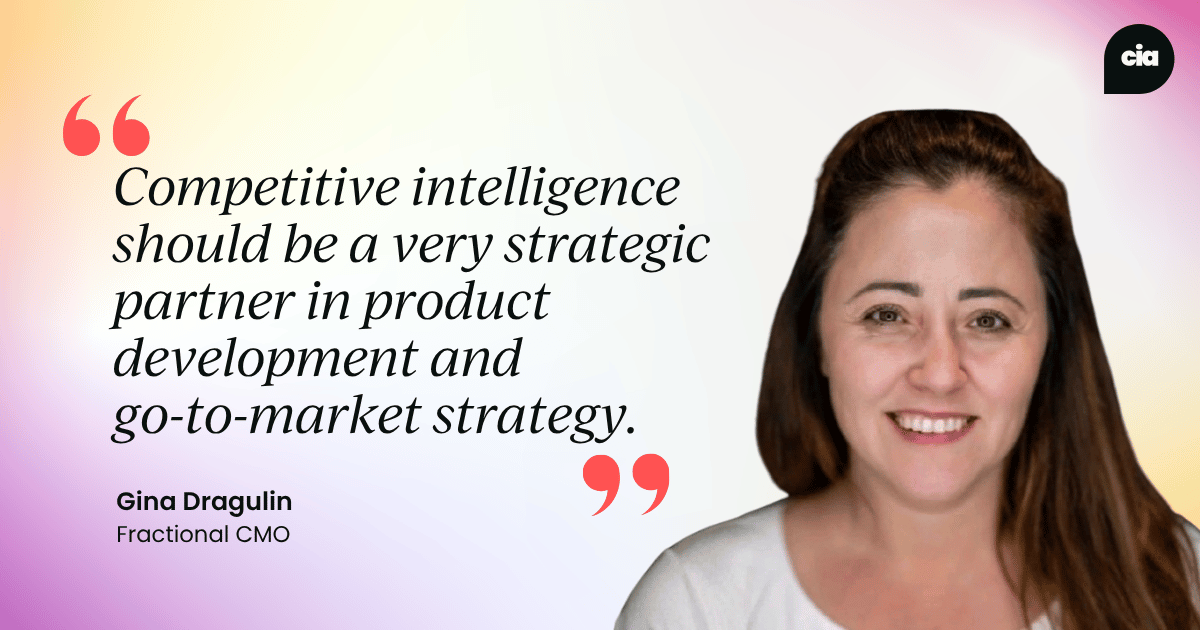
As Fractional CMO Gina Dragulin put it at last year's Competitive Intelligence Summit, CI "should be a very strategic partner in product development and go-to-market strategy."
That means moving beyond the reflex of saying "our competitor has launched X feature, so should we" and toward a more nuanced framing: here's why now is – or isn't – the right time to build this, based on what the market is saying and what adoption patterns look like.
In this sense, CI functions less as a discovery engine and more as what Udit Misra, VP of Product Marketing at LearnWorlds, calls "the strategic filter that helps product make smarter prioritization decisions."
Stop reporting, start influencing
There's an important distinction between reactive and proactive CI. Reactive CI – monitoring the market, producing reports, and hoping someone acts on them – has limited value.
True impact comes from synthesizing signals across customer interviews, win/loss data, and market analysis to understand what they mean – and then translating that into strategic bets your organization can make for the short, medium, and longer term. That's the kind of CI that earns a seat in conversations with product leadership before roadmaps are set.
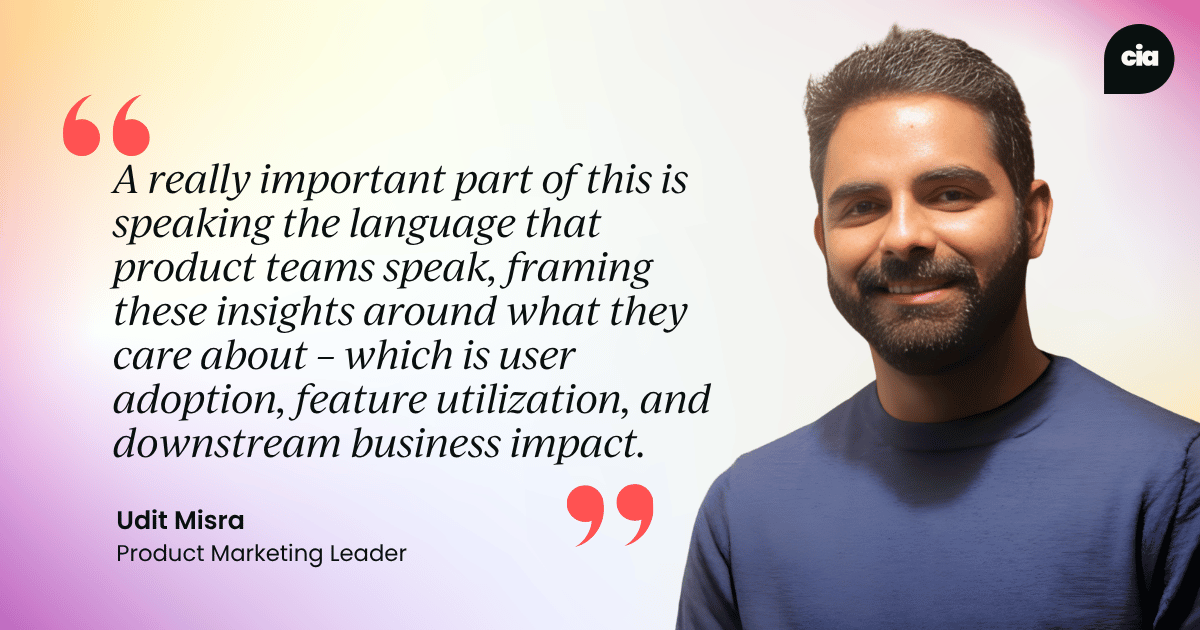
When you deliver these insights, it’s vital to speak in terms that grab product teams’ attention. They care about user adoption, feature utilization, and downstream business impact. If you're showing up to roadmap conversations with just a competitive gap analysis, you're not speaking their language:
"A really important part of this is speaking the language that product teams speak, framing these insights around what they care about – which is user adoption, feature utilization, and downstream business impact. Not necessarily competitive gaps, per se."
– Udit Misra
When CI changes the game: Real-world examples
It's one thing to talk about CI strategy in the abstract. It looks very different in practice. Let’s dive into a couple of examples.
Repositioning in cybersecurity
In the panel discussion, Gina Ragulin (then VP of Product Marketing at SoSafe) described how a combination of market and customer intelligence informed a significant repositioning – from a security awareness platform to a human risk management platform.
The insight that sparked this change wasn't just about what competitors were doing; it was about understanding the different needs of smaller versus enterprise customers. Smaller organizations cared more about user experience and accessibility; larger ones needed scalability and a broad integration suite.
Prioritizing accordingly – and building the right proposition for each segment – ultimately led to recognition as a top-three player in the category by Forrester.
Resisting the AI goldrush
When ChatGPT arrived in late 2022, every competitor in the legal tech space raced to add AI to their platform – typically in the form of a chatbot wrapper. Udit Misra, who led SpotCraft’s PMM function at the time, describes the conventional CI logic:
"Traditional CI would have told us to do the same thing. Just like everyone else is doing it, we're gonna miss out if we don't implement AI in the exact same way because, apparently, that's what the market wanted."
Rather than follow the crowd, the team ran a large study to find out whether users were actually getting value from competitors' AI features. The answer was no. So, instead of racing to market with a chatbot, they took more time and built something more contextual – embedding AI into MS Word, the tool lawyers had always lived in, rather than asking them to adopt an unfamiliar interface.
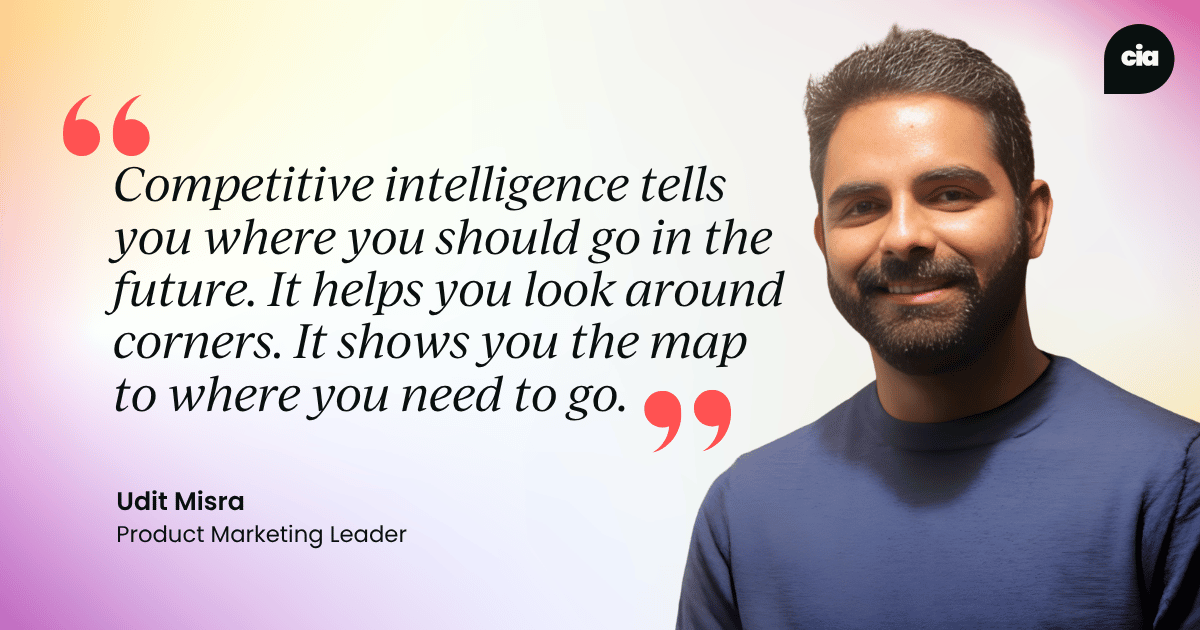
The result was a product that competitors eventually started copying. As Udit puts it, the key is treating CI not as a rearview mirror but as a GPS:
"It tells you where you should go in the future. It helps you look around corners. It shows you the map to where you need to go."
Where CI matters most across the product lifecycle
Ask most people when CI is most useful in the product development lifecycle, and they'll say ideation – helping generate ideas for what to build. In reality, that's probably where it matters least.
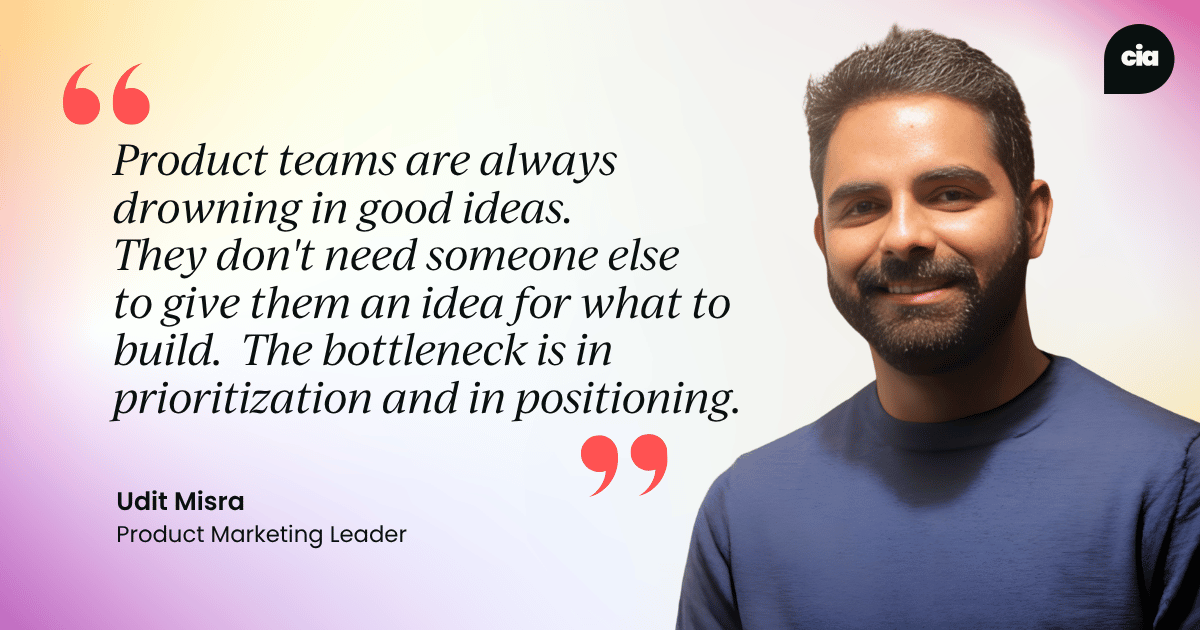
Product teams don't need more ideas. They're drowning in them. As Udit Misra puts it:
"Product teams are always drowning in good ideas. They don't need someone else to give them an idea for what to build. Everyone has an idea for what product should build. It's one of the pitfalls of being in product. The bottleneck is in prioritization and in positioning."
When CI drives product direction rather than filtering it, things can go wrong quickly:
"We don't need to design our product based on competitive paranoia. That leads to feature bloat."
– Udit Misra
Where CI really earns its keep is in helping product teams sequence their decisions – determining which of ten validated ideas to pursue first, based on market readiness, competitive gaps, and GTM fit. It then matters again in the run-up to launch, where CI insights should be arming your go-to-market organization with the arguments they need to win:
"Successful competitive intelligence will actually be evident at the phase prior to launch and in that launch moment. That comes with equipping the go-to-market organization with the right intelligence to be able to have those educated conversations. They will transform a discussion into a win."
– Gina Dragulin
That also means being honest about where you're still catching up. Transparency about current limitations – paired with a clear plan for what comes next – builds more trust with GTM teams than overpromising ever will.
Measuring the impact of CI
Proving the value of CI work is notoriously difficult. The most meaningful metrics, though, are the ones closest to revenue – win rates, churn impact, and influence on deals. Everything else risks becoming a vanity metric.
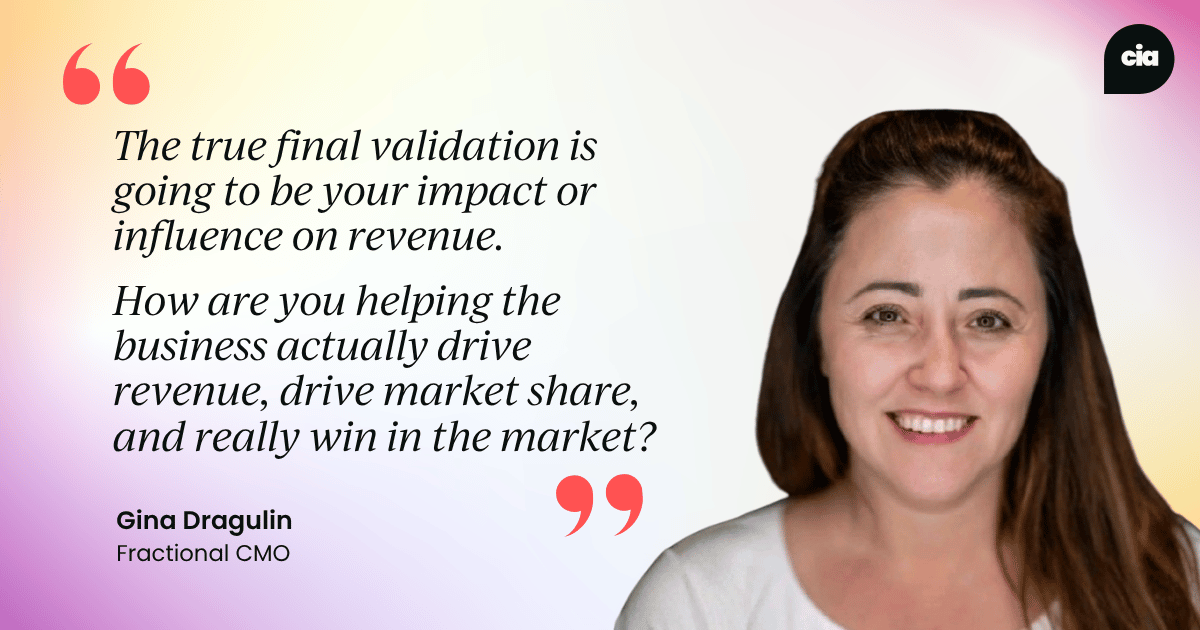
As Gina Dragulin points out, one insight that generates a million dollars in revenue is worth far more than a hundred that don't move the needle:
"The true final validation is going to be your impact or influence on revenue. How are you helping the business actually drive revenue, drive market share, and really win in the market?"
Beyond the numbers, Udit Misra tracks a "product confidence score" – how confident engineering and PM teams are in CI recommendations – as well as the rate at which those recommendations actually get implemented. Both are useful proxies for whether CI is genuinely influencing decisions or just informing them.
There's also a more qualitative – but equally telling – signal to watch for. When the rest of the organization starts generating CI of its own, you know you've built something real. When sales reps bring you market observations from customer calls, when PMs connect product feedback to competitive positioning, the intelligence function has become genuinely embedded in the culture:
"I love when I see sales guys coming to us saying, 'I heard this, I heard that – I think this is something we may want to experiment with.' It's a true indication that you're building a culture where customers are being centred, and folks are thinking in the sense of differentiation."
– Gina Dragulin
The bottom line
CI's value in product development comes from being embedded early, speaking product's language, and helping teams answer the question that matters most: why should we prioritize this – and why should we prioritize it now?
Get that right, and CI stops being a function that informs decisions and becomes one that shapes them. That’s where the real impact lies.
Quotes in this article have been lightly edited for clarity and are drawn from a panel discussion at the 2025 Competitive Intelligence Summit.

.png?v=9NcA-Rkt22NTrJVL)